FAT and SAT for Imported Paper Cutters: What Buyers Should Expect

Factory Acceptance Testing (FAT) and Site Acceptance Testing (SAT) give an imported paper cutter a measurable handover path. They do not replace the buyer’s technical specification. They prove that the agreed configuration works first at the factory and then under the site conditions.
Write the acceptance protocol before the deposit
The protocol should identify the machine, configuration, power supply, test materials, stack height, target dimensions, tolerance, safety functions, documents and pass or fail method. Define who supplies samples, who records measurements and what happens to an open item.
Avoid a vague requirement such as “accurate cutting.” State the measurement method, number of repeated cuts and permitted variation. If the result depends on material, name the material and thickness.
FAT: what to witness at the factory
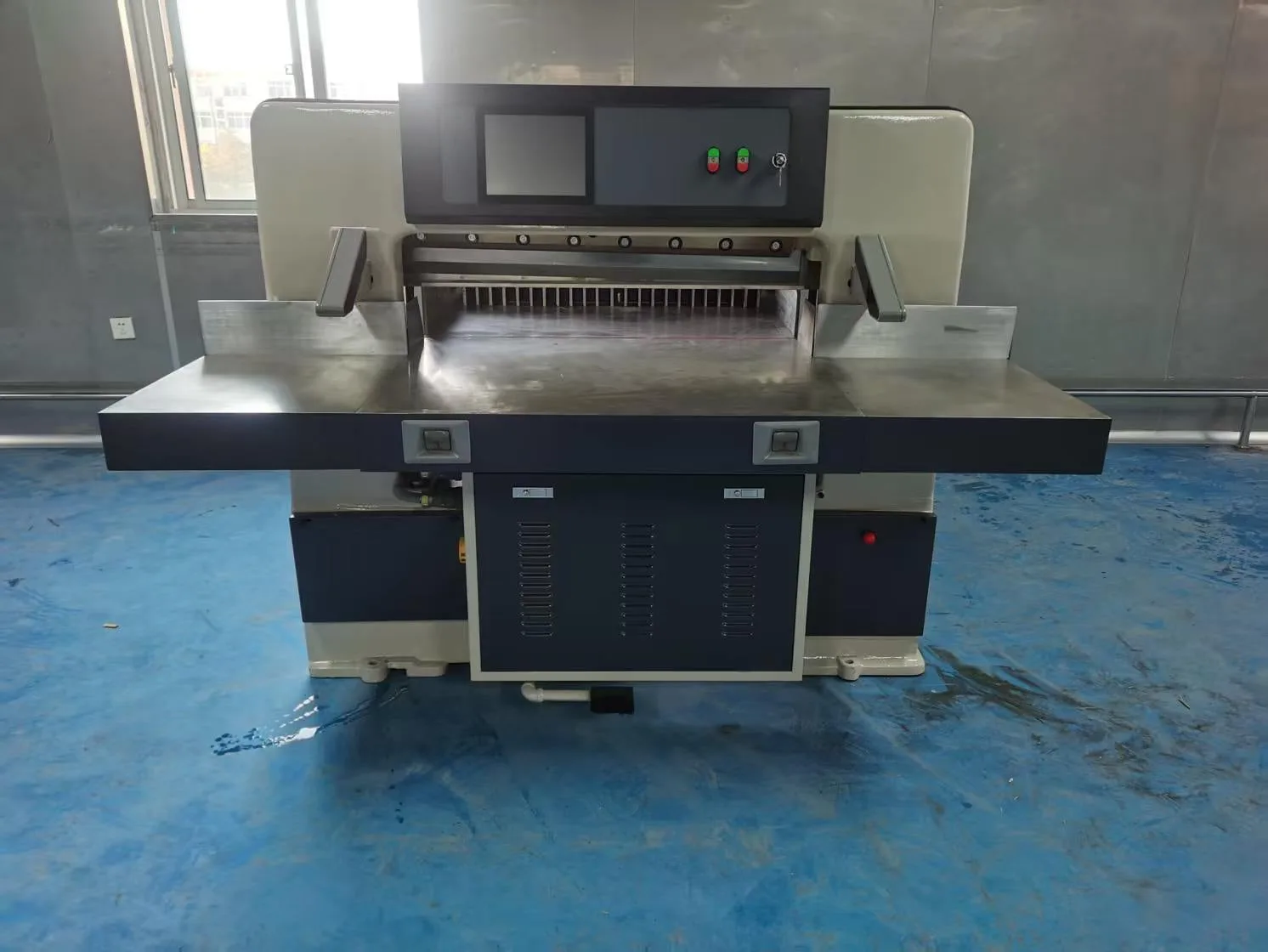
At FAT, verify nameplate and serial numbers, electrical configuration, hydraulic operation, clamp and knife cycles, positioning, display or program functions, accessories and safety devices. Run representative cuts and record actual results rather than relying on a demonstration video.
Check the packing list and photograph the machine, controls, included tools and critical spare parts. Review manuals, wiring diagrams, installation drawings, maintenance instructions and training records before signing.
SAT: what changes at the site
SAT should confirm installation, leveling or foundation conditions where applicable, local power, guarding, operator access, material handling and production tests. Repeat the critical safety checks after installation. A machine can pass FAT and still need correction when voltage, floor conditions or upstream material flow differs.
Define the handover threshold: accepted, accepted with listed punch items, or rejected pending corrective action. Link any retention or final payment to clearly documented milestones agreed by both parties.
Import documentation and evidence
Keep the signed FAT/SAT forms, measurement sheets, photos, serial numbers, packing list, manuals, training attendance and open-item register. These records support warranty claims and future maintenance.
Buyer checklist
- Approve the protocol before production is complete.
- Use representative material and measurable tolerances.
- Record safety, function and documentation results separately.
- Repeat critical tests after installation.
- Assign owners and dates to every punch item.
Next step
Send your test materials, power standard and acceptance criteria to Luolan Machinery. The team can prepare a FAT/SAT checklist for QZK920, QZK1370C or QZK1300.