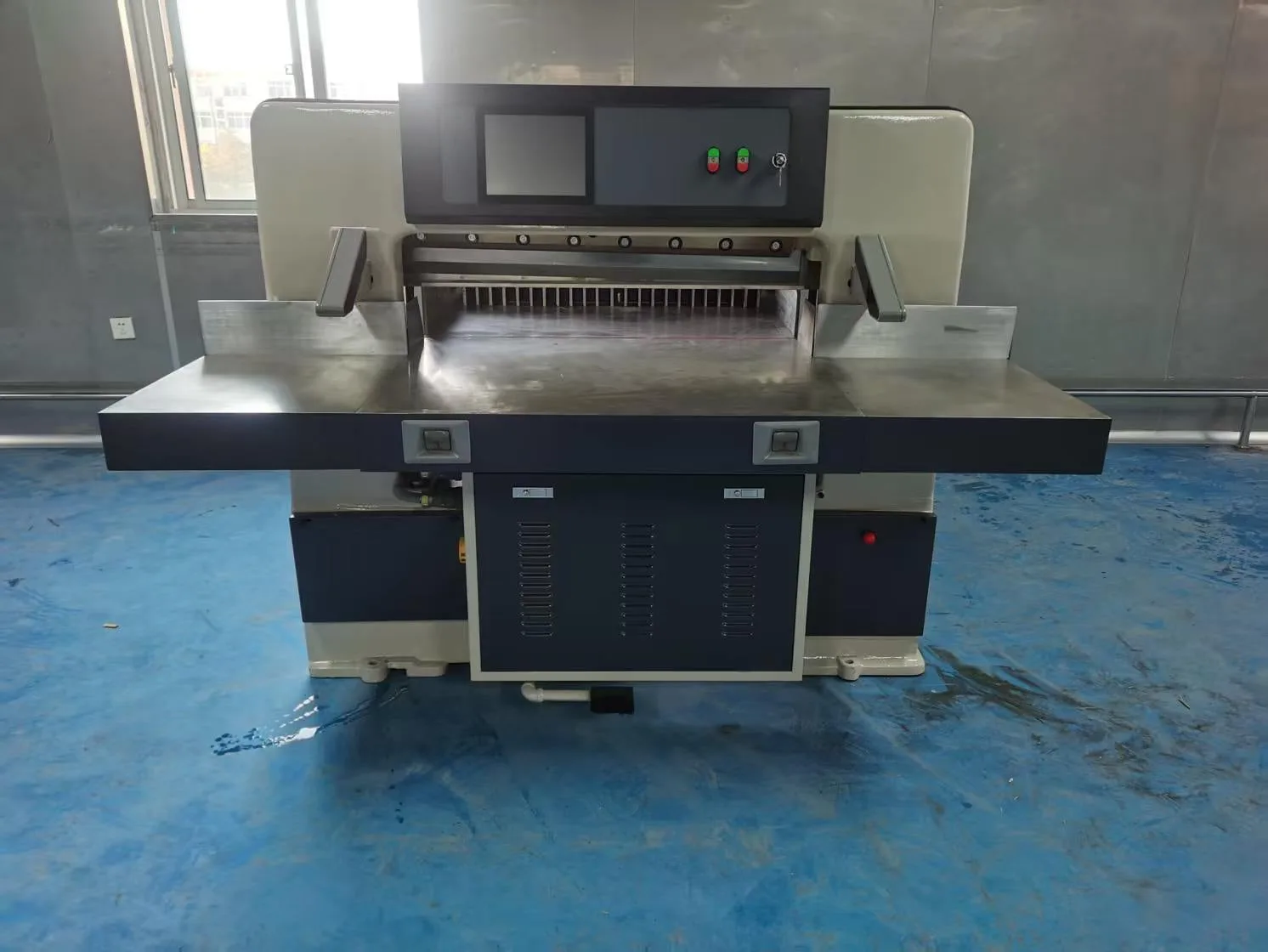
Paper Cutter Maintenance and Knife-Change Basics for Production Teams

Maintenance is part of cutting accuracy. A paper cutter can appear mechanically sound while a dull knife, contaminated clamp surface or incorrect adjustment gradually increases burrs, waste and rework. Buyers should request a maintenance plan at the same time as the machine quotation.
Daily checks operators can own
At the start of a shift, the operator should inspect the work area, emergency stop, guards or light barrier, clamp face, table surface and visible hydraulic leakage. Remove paper dust and scraps from the table and check that the programmed or displayed position agrees with the job ticket.
Run a controlled test cut with approved material before production. Record unusual noise, vibration, slow knife travel or inconsistent clamping. These observations are more useful than waiting for a complete failure.
Weekly and periodic maintenance
Maintenance staff should follow the manufacturer’s schedule for lubrication, hydraulic inspection, electrical cabinet cleaning and calibration checks. Keep a log with date, machine hours, adjustment made, part replaced and person responsible. The log helps distinguish a blade problem from a positioning or clamping problem.
Do not use a generic lubricant or change hydraulic settings because a cut looks slow. Confirm the correct specification and escalation path with the supplier. Any work near the knife, drive or safety circuit should follow the site’s lockout and isolation procedure.
When to change or sharpen the knife
A fixed calendar is not enough. Knife life depends on material, stack height, cutting frequency and sharpening quality. Warning signs include increasing burrs, crushed edges, extra force, repeated re-cuts and a need to change the cutting stick position more often.
Before changing the knife, isolate the machine, secure the knife with the proper handling tool and keep hands outside the danger zone. Use the manufacturer’s procedure for knife height, torque and cutting-stick adjustment. After installation, run several test cuts at a controlled stack height and record the result.
Spare knife and cutting-stick planning
A production plant should keep at least one prepared replacement knife or an agreed sharpening route, plus cutting sticks and the correct fasteners. For imported equipment, confirm packaging, part numbers, lead times and whether sharpening instructions are supplied locally.
Maintenance questions for an RFQ
Ask for the preventive-maintenance schedule, consumable part numbers, recommended stock, training scope, remote diagnostic support and warranty treatment for wear parts. These details affect uptime more than a brochure cycle number.
Next step
Share the planned shifts, materials and service location with Luolan Machinery. The team can align the maintenance, knife-change and spare-parts plan with QZK920, QZK1370C or QZK1300.